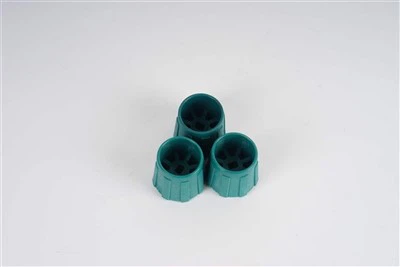
When it comes to electrical equipment, the design and functionality of switch knobs play a crucial role. Anti-slip switch knobs, in particular, are essential for ensuring safe and efficient operation. As a leading supplier of Anti-slip Switch Knob, I am often asked about the materials used to make these knobs. In this blog post, I will delve into the various materials commonly employed in the manufacturing of anti-slip switch knobs, their properties, and why they are suitable for this application.
Rubber
Rubber is one of the most popular materials for anti-slip switch knobs due to its excellent grip and flexibility. Natural rubber, derived from the latex of rubber trees, offers high elasticity and resistance to wear and tear. Synthetic rubbers, such as neoprene and silicone, are also widely used. Neoprene is known for its resistance to oil, chemicals, and weathering, making it suitable for industrial applications. Silicone rubber, on the other hand, has a high temperature resistance and is often used in applications where heat is a concern.
The surface of rubber switch knobs can be textured to enhance grip. This can be achieved through various methods, such as molding or embossing. The texture provides additional friction, making it easier to turn the knob even when hands are wet or greasy. Rubber knobs are also comfortable to hold, reducing hand fatigue during extended use.
Plastic
Plastic is another common material for anti-slip switch knobs. It is lightweight, durable, and can be easily molded into various shapes and sizes. There are several types of plastics used in the manufacturing of switch knobs, including acrylonitrile butadiene styrene (ABS), polycarbonate (PC), and polypropylene (PP).
ABS is a popular choice due to its high impact resistance and good dimensional stability. It is also relatively easy to machine and can be painted or printed with logos and markings. Polycarbonate is known for its high strength and transparency, making it suitable for applications where visibility is important. Polypropylene is a lightweight and cost-effective option that offers good chemical resistance.
To enhance the anti-slip properties of plastic knobs, manufacturers often add additives or use special surface treatments. For example, a soft-touch coating can be applied to the surface of the knob to provide a better grip. Some plastics can also be textured during the molding process to increase friction.
Reinforced Nylon
Reinforced Nylon Switch Knob is a high-performance material that combines the strength of nylon with the added reinforcement of glass fibers or other fillers. This makes it an ideal choice for applications where high strength and durability are required. Reinforced nylon has a high melting point, good chemical resistance, and excellent mechanical properties.
The addition of glass fibers or other fillers increases the stiffness and strength of the nylon, making it less prone to deformation under load. This is particularly important for switch knobs that are used in high-stress applications. Reinforced nylon knobs can also be designed with a textured surface to improve grip.


Metal
Metal switch knobs are often used in applications where a high level of durability and a premium look and feel are required. Metals such as aluminum, brass, and stainless steel are commonly used. Aluminum is lightweight, corrosion-resistant, and can be easily anodized to provide a protective finish. Brass has a warm, golden appearance and is known for its good conductivity. Stainless steel is highly resistant to corrosion and has a sleek, modern look.
Metal knobs can be machined or cast to achieve the desired shape and finish. They can also be textured or knurled to enhance grip. However, metal knobs can be more expensive than other materials and may require additional surface treatments to prevent corrosion.
Composite Materials
Composite materials are made by combining two or more different materials to create a new material with improved properties. In the case of anti-slip switch knobs, composite materials can be used to combine the best properties of different materials. For example, a composite knob could be made by combining a rubber outer layer with a plastic or metal core.
The rubber outer layer provides the anti-slip grip, while the plastic or metal core provides the strength and durability. Composite materials can also be designed to have specific properties, such as high temperature resistance or chemical resistance.
Choosing the Right Material
When choosing the material for an anti-slip switch knob, several factors need to be considered. These include the application, the environment in which the knob will be used, the required level of grip, and the budget.
For applications where the knob will be used in a wet or greasy environment, rubber or a material with a high coefficient of friction is recommended. If the knob needs to be durable and resistant to high temperatures, reinforced nylon or metal may be a better choice. For applications where cost is a major factor, plastic may be the most suitable option.
Conclusion
In conclusion, there are several materials available for making anti-slip switch knobs, each with its own unique properties and advantages. Rubber, plastic, reinforced nylon, metal, and composite materials are all commonly used, depending on the specific requirements of the application. As a supplier of Anti-slip Switch Knob, I can help you choose the right material for your needs. If you are interested in purchasing anti-slip switch knobs or have any questions about the materials used, please feel free to contact us for a consultation. We look forward to working with you to provide the best solutions for your electrical equipment control needs.
References
- "Materials for Switch Knobs." Engineering Materials Handbook.
- "Rubber and Plastic Materials for Industrial Applications." Polymer Science Journal.
- "Metal Alloys for Electrical Components." Metallurgy and Materials Engineering.