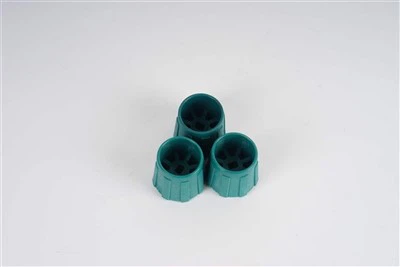
Are anti - slip switch knobs resistant to chemicals?
As a supplier of Anti - slip Switch Knobs, I often encounter questions from customers regarding the chemical resistance of our products. In industrial and commercial settings, switch knobs are exposed to a wide range of chemicals, and their ability to withstand these substances is crucial for long - term performance and safety.
Understanding Anti - slip Switch Knobs
Anti - slip switch knobs are designed to provide a secure grip, reducing the risk of accidental operation. They are commonly used in various applications, including machinery, electrical equipment, and control panels. Our Anti - slip Switch Knob is made from high - quality materials that are carefully selected to ensure both anti - slip properties and durability.
Chemical Resistance Factors
The chemical resistance of anti - slip switch knobs depends on several factors, including the material of the knob, the type of chemicals it is exposed to, and the duration of exposure.
Material Selection
Most of our anti - slip switch knobs are made from engineering plastics, such as Reinforced Nylon Switch Knob and Engineering Plastic Switch Knob. These materials are known for their excellent mechanical properties and chemical resistance.
Nylon, for example, has good resistance to many common chemicals, including oils, greases, and some solvents. It can withstand a certain level of chemical exposure without significant degradation. However, it may be affected by strong acids, alkalis, and some organic solvents.
Engineering plastics, on the other hand, are specifically formulated to have enhanced chemical resistance. They are designed to resist a wider range of chemicals, including corrosive substances. These plastics are often used in harsh industrial environments where exposure to chemicals is common.
Type of Chemicals
The type of chemicals that anti - slip switch knobs are exposed to plays a significant role in determining their chemical resistance. Some chemicals are more aggressive than others and can cause damage to the knob material more quickly.
For instance, strong acids and alkalis can react with the plastic material, causing it to swell, crack, or lose its mechanical properties. Organic solvents, such as acetone and toluene, can dissolve or soften the plastic, leading to a loss of anti - slip properties.
On the other hand, mild chemicals, such as water - based cleaners and some lubricants, are less likely to cause significant damage to the switch knobs.
Duration of Exposure
The longer the anti - slip switch knobs are exposed to chemicals, the greater the risk of damage. Even if a chemical is relatively mild, prolonged exposure can still cause degradation of the knob material over time.
In industrial settings, where switch knobs may be in constant contact with chemicals, it is important to consider the long - term effects of chemical exposure. Regular inspections and maintenance can help identify any signs of damage early and prevent further deterioration.
Testing Chemical Resistance
To ensure the chemical resistance of our anti - slip switch knobs, we conduct a series of tests. These tests simulate real - world conditions and evaluate the performance of the knobs when exposed to different chemicals.
We use standardized testing methods to measure the changes in the physical and mechanical properties of the knobs after chemical exposure. This includes tests for hardness, tensile strength, and anti - slip performance.
Based on the test results, we can determine the suitability of our switch knobs for different chemical environments. We also provide customers with detailed information about the chemical resistance of our products, so they can make informed decisions when selecting the appropriate switch knobs for their applications.
Applications and Chemical Resistance Requirements
Different applications have different chemical resistance requirements. For example, in the food and beverage industry, switch knobs need to be resistant to cleaning agents and sanitizers. In the chemical processing industry, they may need to withstand exposure to corrosive chemicals.
In the automotive industry, switch knobs are often exposed to oils, greases, and automotive fluids. Our anti - slip switch knobs are designed to meet the specific chemical resistance requirements of these industries.


Maintaining Chemical Resistance
To maintain the chemical resistance of anti - slip switch knobs, proper maintenance is essential. This includes regular cleaning and inspection.
When cleaning the switch knobs, it is important to use mild cleaning agents that are compatible with the knob material. Avoid using harsh chemicals or abrasive cleaners, as these can damage the anti - slip surface and reduce the chemical resistance of the knobs.
Regular inspections can help identify any signs of chemical damage, such as discoloration, swelling, or cracking. If any damage is detected, the switch knobs should be replaced immediately to ensure the safety and performance of the equipment.
Conclusion
In conclusion, the chemical resistance of anti - slip switch knobs depends on the material, the type of chemicals, and the duration of exposure. Our Anti - slip Switch Knob products are made from high - quality engineering plastics that offer good chemical resistance in a wide range of applications.
However, it is important to consider the specific chemical environment and requirements of each application. By conducting proper testing and providing detailed information to customers, we can ensure that our switch knobs meet the highest standards of chemical resistance.
If you are in need of anti - slip switch knobs for your industrial or commercial applications, we invite you to contact us for more information. Our team of experts can help you select the most suitable products based on your specific chemical resistance requirements.
References
- ASTM International. (20XX). Standard test methods for evaluating the chemical resistance of plastics.
- Plastics Industry Association. (20XX). Guide to chemical resistance of engineering plastics.