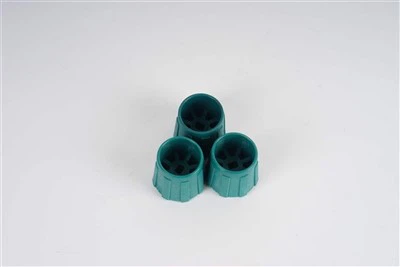
Hey there! As a supplier of Motor Coil Bobbins, I've seen firsthand how crucial it is to ensure the quality of these components. In this blog, I'm gonna share some tips on how to test the quality of a motor coil bobbin.
Visual Inspection
The first step in testing a motor coil bobbin is a simple visual check. You wanna look for any obvious signs of damage, like cracks, chips, or warping. These issues can affect the bobbin's performance and might lead to problems down the line. For example, a crack could cause the coil to short-circuit, which is definitely not what you want.
When you're doing the visual inspection, pay close attention to the edges and corners of the bobbin. These areas are more prone to damage. Also, check the surface of the bobbin for any rough spots or unevenness. A smooth surface is important for proper coil winding.
Dimensional Accuracy
Another important aspect of quality testing is dimensional accuracy. The bobbin needs to have the right dimensions to fit properly in the motor and to ensure that the coil is wound correctly. You can use a caliper or a micrometer to measure the key dimensions of the bobbin, such as the diameter, length, and width.
Make sure the measurements are within the specified tolerances. If the bobbin is too big or too small, it might not work well with the motor or the coil. For instance, if the diameter is off, the coil might not fit snugly on the bobbin, which could lead to poor electrical performance.
Material Quality
The material of the motor coil bobbin plays a huge role in its quality. Different materials have different properties, and you need to choose the right one for your application. One popular material is glass-fiber reinforced nylon. You can learn more about Glass-Fiber Reinforced Nylon Coil Bobbin.
To test the material quality, you can do a few things. First, check the hardness of the material. A hard material is usually more durable and can withstand more stress. You can use a hardness tester to measure the hardness.
You can also look at the color and texture of the material. A consistent color and smooth texture are good signs. If the material looks discolored or has a rough texture, it might be of poor quality.
Electrical Insulation
Electrical insulation is a critical factor in the performance of a motor coil bobbin. The bobbin needs to provide good insulation to prevent electrical leakage and short-circuits. You can use an insulation resistance tester to measure the insulation resistance of the bobbin.
A high insulation resistance value indicates good insulation. If the insulation resistance is too low, it could mean that there are issues with the material or the manufacturing process. You might need to investigate further to find the root cause.
Thermal Resistance
Motors generate heat during operation, so the motor coil bobbin needs to have good thermal resistance. You can test the thermal resistance by subjecting the bobbin to a high-temperature environment and measuring its performance.
For example, you can use a thermal chamber to heat the bobbin to a specific temperature and then measure the change in its properties. If the bobbin deforms or loses its electrical insulation properties at high temperatures, it might not be suitable for your application.

Chemical Resistance
Depending on the environment in which the motor operates, the bobbin might be exposed to various chemicals. So, it's important to test the chemical resistance of the bobbin. You can do this by exposing the bobbin to different chemicals and observing its reaction.
For example, you can immerse the bobbin in a chemical solution for a certain period of time and then check for any signs of damage or degradation. If the bobbin shows signs of corrosion or swelling, it might not be resistant to that particular chemical.
Winding Compatibility
The motor coil bobbin needs to be compatible with the winding process. You can test this by winding a coil on the bobbin and checking for any issues. Make sure the coil winds smoothly and evenly on the bobbin.
If the coil doesn't wind properly, it could be due to the shape or surface of the bobbin. You might need to make some adjustments or choose a different bobbin.
Mechanical Strength
The bobbin needs to have enough mechanical strength to withstand the forces during the winding process and the operation of the motor. You can test the mechanical strength by applying a certain amount of force to the bobbin and checking for any signs of breakage or deformation.
For example, you can use a compression tester to apply a load to the bobbin and measure its ability to withstand the force. If the bobbin breaks or deforms easily, it might not be strong enough for your application.
Conclusion
Testing the quality of a motor coil bobbin is a multi-step process that involves visual inspection, dimensional accuracy, material quality, electrical insulation, thermal resistance, chemical resistance, winding compatibility, and mechanical strength. By following these steps, you can ensure that you're getting a high-quality bobbin that will perform well in your motor.
If you're in the market for a Motor Coil Bobbin, I'd love to have a chat with you. Whether you have any questions about our products or want to discuss a potential purchase, feel free to reach out. We're here to help you find the perfect solution for your needs.
References
- Electrical Engineering Handbook by Richard C. Dorf
- Motor Design and Control by Paul C. Krause, Oleg Wasynczuk, and Scott D. Sudhoff