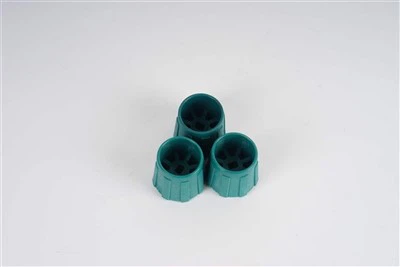
As a supplier of Motor Coil Bobbins, ensuring the integrity of these crucial components is of utmost importance. Motor coil bobbins play a significant role in the proper functioning of motors, as they provide a stable structure for the winding of coils. In this blog, I will share some effective methods to check the integrity of a motor coil bobbin.
Visual Inspection
The first step in checking the integrity of a motor coil bobbin is a thorough visual inspection. This is a simple yet effective way to identify any obvious signs of damage or defects. Start by examining the overall appearance of the bobbin. Look for cracks, chips, or any other visible damage on the surface. Cracks can compromise the structural integrity of the bobbin and may lead to issues such as short - circuits or mechanical failure.
Check the edges of the bobbin. They should be smooth and free from burrs. Rough edges can damage the wire during the winding process, which can cause problems in the motor's performance. Also, inspect the flanges of the bobbin. The flanges are the raised edges that hold the coil in place. They should be intact and properly shaped. If the flanges are damaged or misshapen, the coil may not be wound correctly, leading to poor motor performance.
Dimensional Checks
Accurate dimensions are crucial for the proper functioning of a motor coil bobbin. Use precision measuring tools such as calipers or micrometers to measure the key dimensions of the bobbin. Check the outer diameter, inner diameter, and height of the bobbin. These dimensions should match the specifications provided by the design or engineering requirements.
Any deviation from the specified dimensions can cause problems. For example, if the inner diameter is too small, it may be difficult to insert the core or the winding may be too tight, leading to increased resistance and heat generation. On the other hand, if the outer diameter is too large, it may not fit properly in the motor housing.
Material Inspection
The material of the motor coil bobbin is another important aspect to consider. As a supplier, we offer Glass - Fiber Reinforced Nylon Coil Bobbin which has excellent mechanical and electrical properties. To check the material integrity, you can perform a simple hardness test. Use a hardness tester to measure the hardness of the bobbin material. A consistent hardness value indicates a high - quality material.
Also, check for any signs of discoloration or chemical damage. Discoloration may indicate that the material has been exposed to high temperatures or chemicals, which can degrade its properties. If the bobbin is made of a plastic material, look for signs of warping or melting, as these can affect its performance.
Electrical Insulation Testing
Electrical insulation is a critical property of a motor coil bobbin. A good bobbin should provide high - quality insulation to prevent short - circuits between the coil and other components. To test the electrical insulation, use an insulation resistance tester. Connect the tester to the bobbin and measure the insulation resistance.
The insulation resistance value should be within the acceptable range specified by the design. A low insulation resistance value may indicate a problem with the insulation, such as moisture ingress or damage to the insulation material. If the insulation resistance is too low, it can lead to electrical leakage, which can cause the motor to malfunction or even pose a safety hazard.
Winding Inspection
If the bobbin is already wound with a coil, it is important to inspect the winding. Check the uniformity of the winding. The wire should be wound evenly around the bobbin without any loose or overlapping turns. Loose turns can cause the coil to move during operation, which can lead to short - circuits or mechanical damage.
Inspect the wire for any signs of damage, such as breaks or fraying. A damaged wire can affect the electrical performance of the coil and may lead to motor failure. Also, check the connections between the wire and the terminals. The connections should be secure and free from corrosion.
X - ray Inspection
In some cases, especially for complex or high - precision motor coil bobbins, X - ray inspection can be a valuable tool. X - ray inspection allows you to see inside the bobbin and detect any internal defects that may not be visible during a visual inspection. It can reveal hidden cracks, voids, or improper winding inside the bobbin.
However, X - ray inspection requires specialized equipment and trained personnel. It is also more expensive than other inspection methods. Therefore, it is usually used for critical applications or when other inspection methods have not provided conclusive results.
Ultrasonic Testing
Ultrasonic testing is another non - destructive testing method that can be used to check the integrity of a motor coil bobbin. Ultrasonic waves are sent through the bobbin, and the reflections are analyzed to detect any internal defects. This method can detect cracks, delaminations, or other internal flaws that may not be visible on the surface.
Ultrasonic testing is relatively fast and can be used on a large number of bobbins. It is also non - invasive, which means it does not damage the bobbin during the testing process. However, it requires specialized equipment and trained operators to interpret the results accurately.


Thermal Testing
Thermal testing can be used to check the heat dissipation properties of the motor coil bobbin. During normal operation, the coil generates heat, and the bobbin should be able to dissipate this heat effectively. Use a thermal imaging camera to measure the temperature distribution on the surface of the bobbin.
A uniform temperature distribution indicates that the bobbin is dissipating heat properly. Hot spots on the bobbin may indicate a problem with the winding or the material, which can lead to overheating and premature failure of the motor.
Conclusion
Checking the integrity of a motor coil bobbin is a multi - step process that involves visual inspection, dimensional checks, material inspection, electrical insulation testing, and other advanced testing methods. By following these steps, you can ensure that the motor coil bobbins you use or supply are of high quality and will perform reliably in the motor.
As a supplier of Motor Coil Bobbin, we are committed to providing high - quality products. If you are interested in purchasing motor coil bobbins or have any questions about their integrity and quality, please feel free to contact us for further discussion and procurement negotiation.
References
- "Electrical Insulation Handbook" by John D. McDonald
- "Non - Destructive Testing: Principles and Applications" by David A. Scruby and Lawrence J. McMaster
- "Motor Design and Control" by Paul C. Krause, Oleg Wasynczuk, and Scott D. Sudhoff